Determining the Right Patio Cover System for Your Anaheim Home: A 2025 Guide to Structural Shade
Introduction: Beyond the Umbrella
For homeowners in Anaheim (from the historic colony districts to the hills of 92808), the backyard has graduated. It is no longer merely a patch of grass for the dog; it is an extension of the living room, a culinary workspace, and a primary entertainment zone. However, the usability of this space is entirely dictated by one factor: Thermal Control.
The Southern California sun is unforgiving. In Anaheim, where summer temperatures regularly breach 90°F, an unshaded patio is effectively unusable from 11:00 AM to 4:00 PM. Furthermore, the phenomenon of “radiant heat transfer”—where a thin aluminum or vinyl roof absorbs the sun’s energy and radiates it downward—can make a poorly designed patio cover feel like a broiler.
This guide analyzes the structural and material options available to Anaheim homeowners in 2025, focusing on the engineering required to combat the local climate and the regulatory compliance needed to protect your investment.
1. The Physics of Shade: Material Science Matters
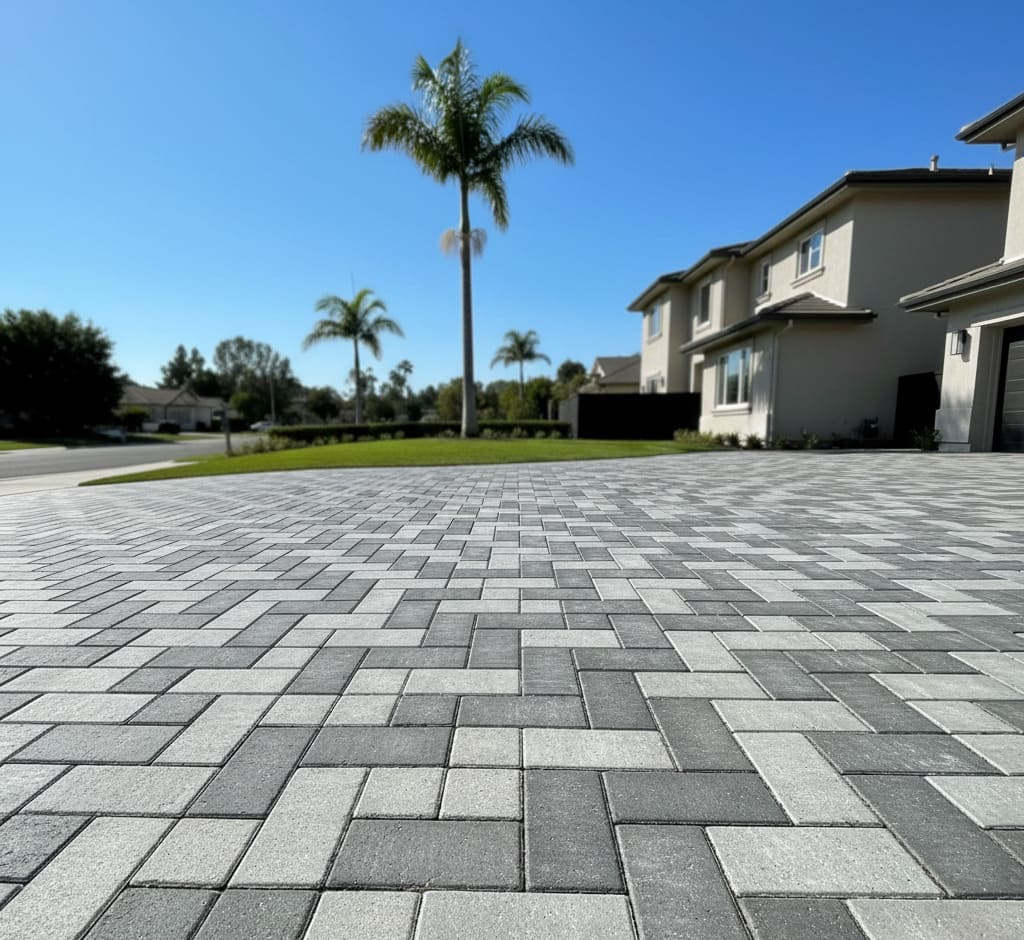
The market offers three primary material classes for patio structures: Wood, Vinyl, and Aluminum. Understanding the thermal and structural properties of each is critical. Ensure your paver installation foundation can support the post loads.
1.1 The Wood Paradox
Western Red Cedar and Redwood are aesthetically timeless. They offer natural insulation and “warmth.” However, in the arid, termite-prone environment of Anaheim, wood is a “maintenance debt.” It requires painting or staining every two to three years to prevent UV degradation and dry rot. While beautiful, it is a biogenic material that creates a perpetual chore for the homeowner.
1.2 The Aluminum Revolution: Alumawood and Beyond
The industry standard has shifted decisively to high-performance aluminum composites. Brands like Duralum and systems using Alumawood technology utilize a heavy-gauge aluminum skin that is embossed with a cedar texture and coated with a fluoropolymer paint system (often Kynar 500).
The Science: This metallurgy provides the aesthetic of wood with the durability of aerospace materials. It is impervious to termites, will not warp or crack, and requires zero repainting.
The Trap: Not all aluminum covers are equal. A “single-skin” or “roll-formed” patio cover is essentially a thin sheet of metal. While it blocks light, it conducts heat.
The Solution: Insulated Structural Panels. These roofs feature a 3-inch to 4-inch core of high-density expanded polystyrene (EPS) foam bonded between two aluminum skins. This assembly creates a thermal break, stopping heat transfer.
2. Selecting Your System: Pergola, Solid, or Hybrid?
Regardless of the design you choose, you must ensure your paver installation foundation includes proper footings to support the concentrated post loads, as standard paver base alone cannot sustain the weight.
2.1 The Modern Pergola (Open Lattice)
The pergola is experiencing a renaissance in 2025, driven by “biophilic design”—the desire to connect with nature.
Function: Provides 40% to 60% shade coverage. It filters light rather than blocking it.
Best For: North or East-facing yards where the sun is less intense, or for homeowners who want to grow climbing vines to create a “living roof.”
Engineering: Modern aluminum pergolas feature cantilevered rafter tails with decorative cuts (Corbel, Scallop, or Mitered) that can be matched to your home’s architectural style, be it Craftsman or Mediterranean.
2.2 The Solid Insulated Roof
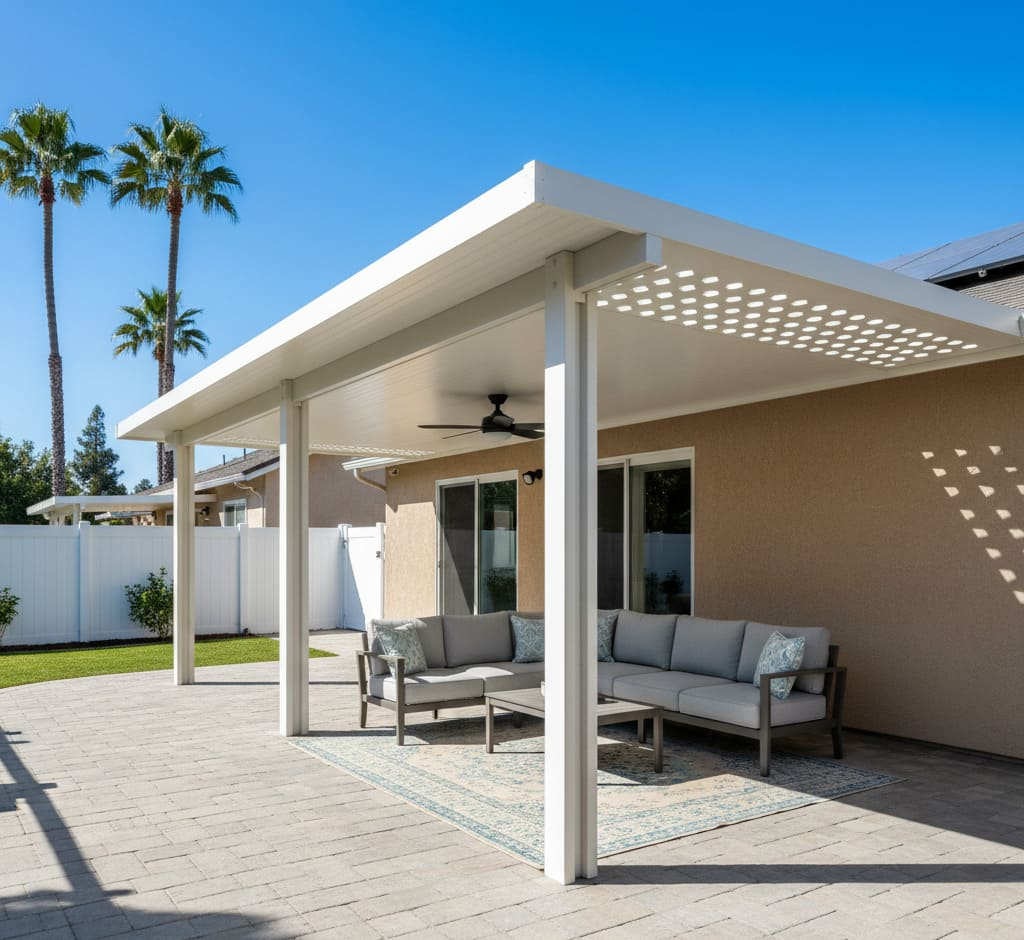
Function: 100% Shade. 100% Rain Protection.
Best For: West-facing yards (the “hot” side of the house) and homeowners who want to install ceiling fans, recessed LED lighting, or outdoor televisions. The structural foam core allows for internal wiring raceways, keeping the ceiling clean and conduit-free.
Value: This structure effectively adds square footage to the home, creating a “California Room” that is protected from the elements.
2.3 The Ultimate Hybrid: Louvered Roof Systems
For those who refuse to compromise, Adjustable Louvered Roofs (such as Equinox or StruXure) offer dynamic control.
Mechanism: Motorized aluminum slats rotate at the touch of a button.
Morning: Open the louvers to let in light and warm the space.
Noon: Angle the louvers to block the sun while allowing hot air to escape upward (ventilation).
Rain: Close the louvers completely to form a water-tight roof with integrated gutters.
Tech: These systems can integrate with smart home platforms and rain sensors, closing automatically when the first drop falls.
3. The Next Level: Motorized Screens and Enclosures
The boundary between “Patio” and “Room” is blurring.
3.1 Motorized Retractable Screens
Imagine a screened porch that disappears when you don’t need it. Motorized screens (e.g., Phantom, Apollo) house a rolled mesh screen inside the horizontal beams of your patio cover.
The “June Bug” Defense: Deploy the screens at dusk to seal out mosquitoes and gnats.
Solar Armor: Use “Solar 90” mesh to block 90% of the sun’s heat and glare before it hits your patio doors, significantly reducing your home’s AC bill.
Pro Tip: Concealing the motors and running hardline power through the structure is a complex task that requires experienced patio builders near me for electrical integration to ensure seamless operation and safety.
3.2 From Patio to Sunroom
Converting a patio cover to a glass-enclosed sunroom is a major construction event.
Title 24 Compliance: Anaheim enforces California’s strict energy efficiency standards. A sunroom requires high-performance “Low-E” glass that limits solar heat gain.
Foundation Warning: You cannot simply build glass walls on a standard 3-inch patio slab. The weight of the glass and the wind loads require a proper structural footing, often 12 inches deep and reinforced with rebar. Skipping this step ensures cracked glass and sticking doors.
4. Zoning and Permitting in Anaheim: What You Must Know
Building without a permit is a gamble with your property’s title. In Anaheim, permits are required for any patio cover attached to the house or exceeding 120 square feet.
4.1 The Setback Rules
The City of Anaheim Municipal Code (Title 18) dictates where you can build.
Rear Yard: You generally need to keep your structure 10 to 15 feet away from the rear property line. However, open lattice structures often have more lenient allowances than solid roofs.
Side Yard: A 5-foot “no-build” zone is standard for fire access.
Encroachment Exceptions: Ground-floor private patios in denser zones may encroach up to 8 feet into setbacks in certain conditions. Knowing these “exceptions” is how an expert contractor maximizes your space legally.
4.2 The Structural Ledger
The most dangerous part of a DIY patio cover is the connection to the house (the ledger).
Safety Critical: In the event of an earthquake or high wind, the patio cover exerts tremendous force on the house.
Inspection: City inspectors will verify that the ledger is lagged directly into solid structural lumber (studs or rim joists). Attaching only to the stucco or siding is a code violation and a safety hazard.
Conclusion
Your outdoor space is an asset. Whether you choose the filtered light of a lattice pergola or the robust protection of an insulated solid roof, the success of the project relies on two things: Engineering that respects the climate, and Compliance that respects the law. With the right design and professional execution, you can create a shaded sanctuary that complements your pet turf and hardscaping.